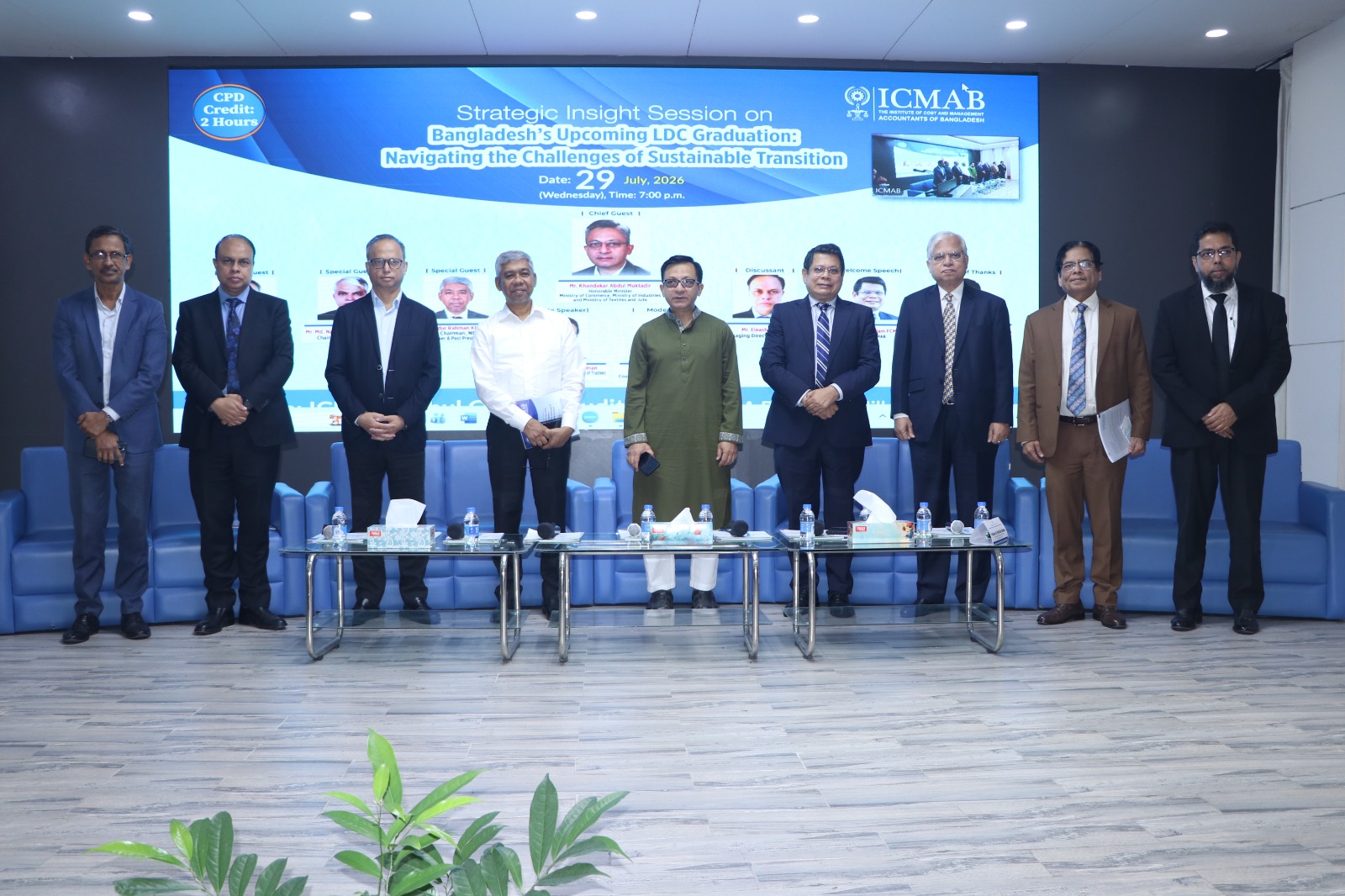
The Institute of Cost and Management Accountants of Bangladesh (ICMAB) organized a Strategic Insight Session titled “Bangladesh’s Upcoming LDC Graduation: Navigating the Challenges of Sustainable Transition” on Wednesday, July 29, 2026, at the ICMAB Ruhul Quddus Auditorium, ICMA Bhaban, Nilkhet, Dhaka.
The session aimed to identify the underlying economic, trade, institutional, regulatory, and private-sector challenges associated with Bangladesh’s graduation from the Least Developed Country category and to outline practical strategies for ensuring a smooth, sustainable, and resilient transition.
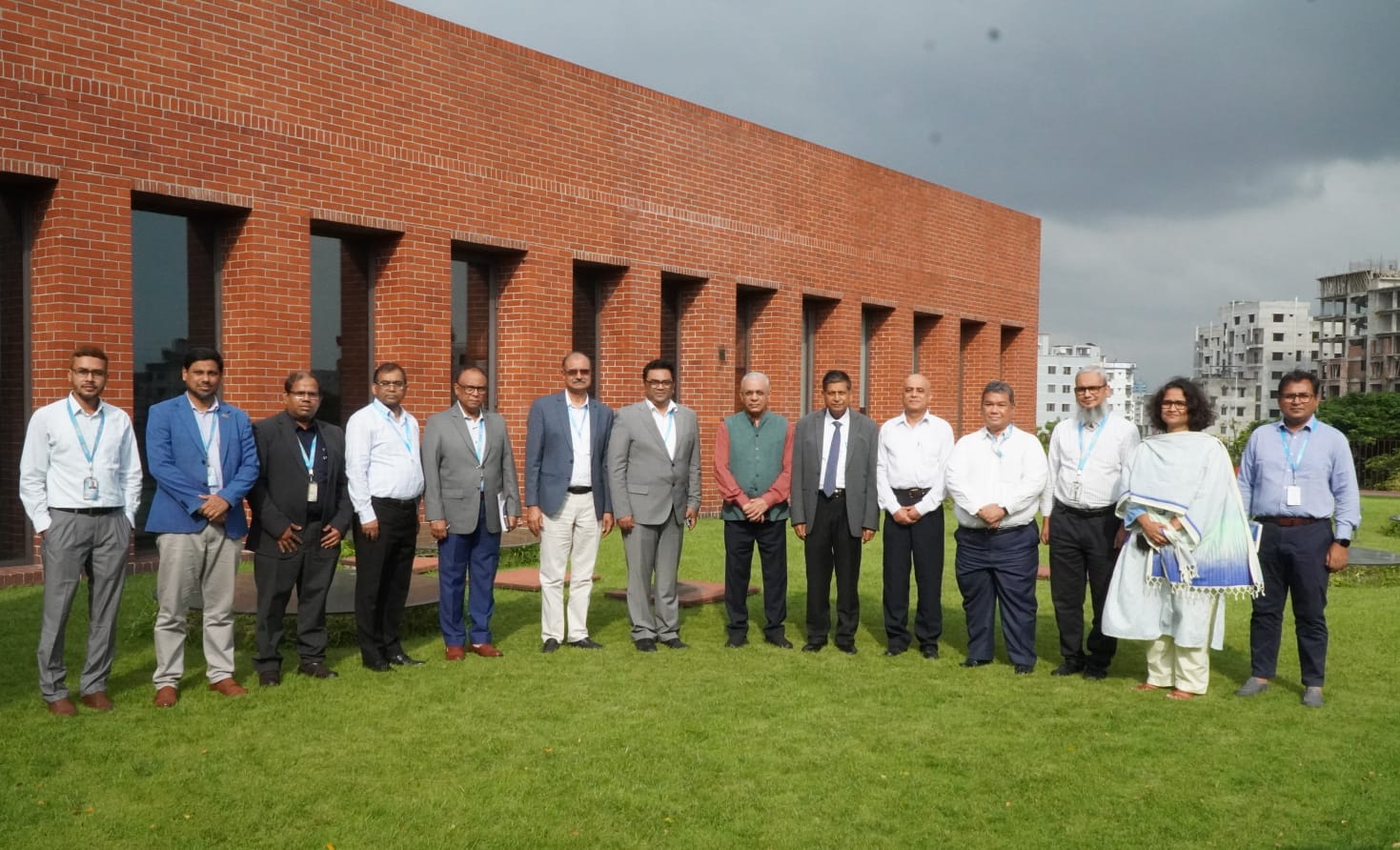
Policymakers, business leaders, economists, professionals, academicians, and other stakeholders participated in the session to discuss Bangladesh’s preparedness for the post-LDC environment and the measures required to strengthen export competitiveness, investment, productivity, and sustainable economic development.
Mr. Khandakar Abdul Muktadir, Honorable Minister for Commerce, Industries, and Textiles and Jute, attended the program as the chief guest, while ICMAB President Mr. Md. Kausar Alam FCMA presided over the event.
Mr. Mahmud Hasan Khan, President of the BGMEA; Mr. Md. Nasser Shahrear Zahedee, Chairman of Radiant Group; and Mr. Md. Abdur Rahman Khan FCMA, former Chairman of the National Board of Revenue, Council Member, and Past President of ICMAB, attended the session as Special Guests.
At the outset of the program, Mr. Md. Kausar Alam FCMA, President of ICMAB, delivered the welcome address. In his remarks, he emphasized the vital role of professional accountants in supporting businesses and policymakers in navigating this critical economic transition.
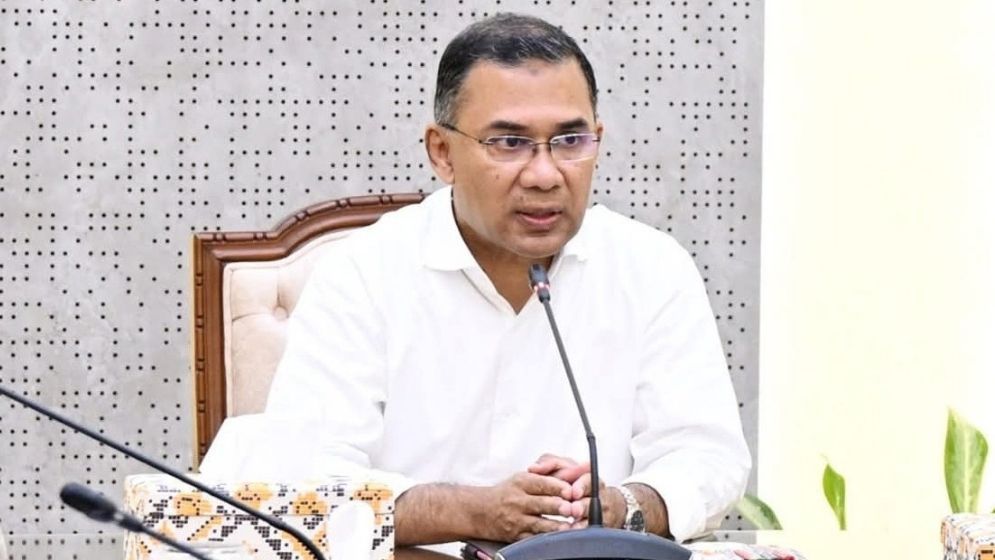
Addressing the event, the Commerce Minister said that although Bangladesh had fulfilled the criteria for graduation from the Least Developed Country category, the greater challenge lay in ensuring that the transition was sustainable and beneficial to the economy.
He observed that the withdrawal of LDC-specific benefits would create new challenges for the country’s exports, pharmaceutical industry, and international trade. Bangladesh should therefore move forward with the transition after undertaking the necessary structural and institutional reforms, he added.
The Minister said the Government was working to increase energy supplies, expand liquefied natural gas infrastructure, restore stability in the banking sector, and simplify procedures for establishing and operating businesses.
He also outlined plans to ensure the rapid and fully digital delivery of essential services for new investors, including company registration, trade licensing, and import and export registration.
The Minister noted that a substantial portion of the country’s industrial sector was currently operating below capacity because of energy shortages. He expressed optimism that ensuring an adequate and reliable gas supply would significantly increase industrial production and contribute to stronger economic growth.
Mr. Md. Abdur Rahman Khan FCMA, former Chairman of the National Board of Revenue and former President of ICMAB, said that good governance, infrastructure development, policy continuity, and political stability would be essential for Bangladesh to succeed in the post-LDC era.
He observed that the people of Bangladesh possessed remarkable capabilities and potential, but emphasized that effective implementation of policies and strategies would be crucial to achieving the desired outcomes.
BGMEA President Mr. Mahmud Hasan Khan said that increasing domestic value addition and export retention had become more important than merely expanding the volume of exports.
He stated that the ready-made garment sector could achieve at least 10 percent growth if the energy situation improved and greater access to low-cost financing was ensured. He also called for the expansion of Bangladesh Bank’s special financing facilities for the industry.
In his keynote presentation, Professor Dr. Mustafizur Rahman provided an in-depth analysis of the challenges Bangladesh may face following LDC graduation, including intensified competition in international trade, the gradual erosion of preferential tariff benefits, and the need for broader economic transformation.
He emphasized the importance of enhancing productivity, diversifying exports, and accelerating policy and institutional reforms to strengthen Bangladesh’s competitiveness in the post-graduation period.
Mr. Eleash Mridha, Managing Director of PRAN Group, participated as the discussant, while Mr. Arif Khan FCMA, former President of ICMAB, moderated the discussion. Mr. Monjur Md. Shaiful Azam FCMA, Secretary of ICMAB, offered the vote of thanks at the conclusion of the program.
Speakers at the dialogue agreed that although LDC graduation would mark an important milestone in Bangladesh’s development journey, its ultimate success would depend on comprehensive structural reforms, energy security, financial-sector stability, skilled human-resource development, policy consistency, and the creation of a predictable and investment-friendly business environment.







0 Comments